Why Gymnastic Rings Should Be Your Secret Weapon
Rings build strength that bars can't. Discover why elite calisthenics athletes swear by this unstable, humbling, and incredibly effective training tool.
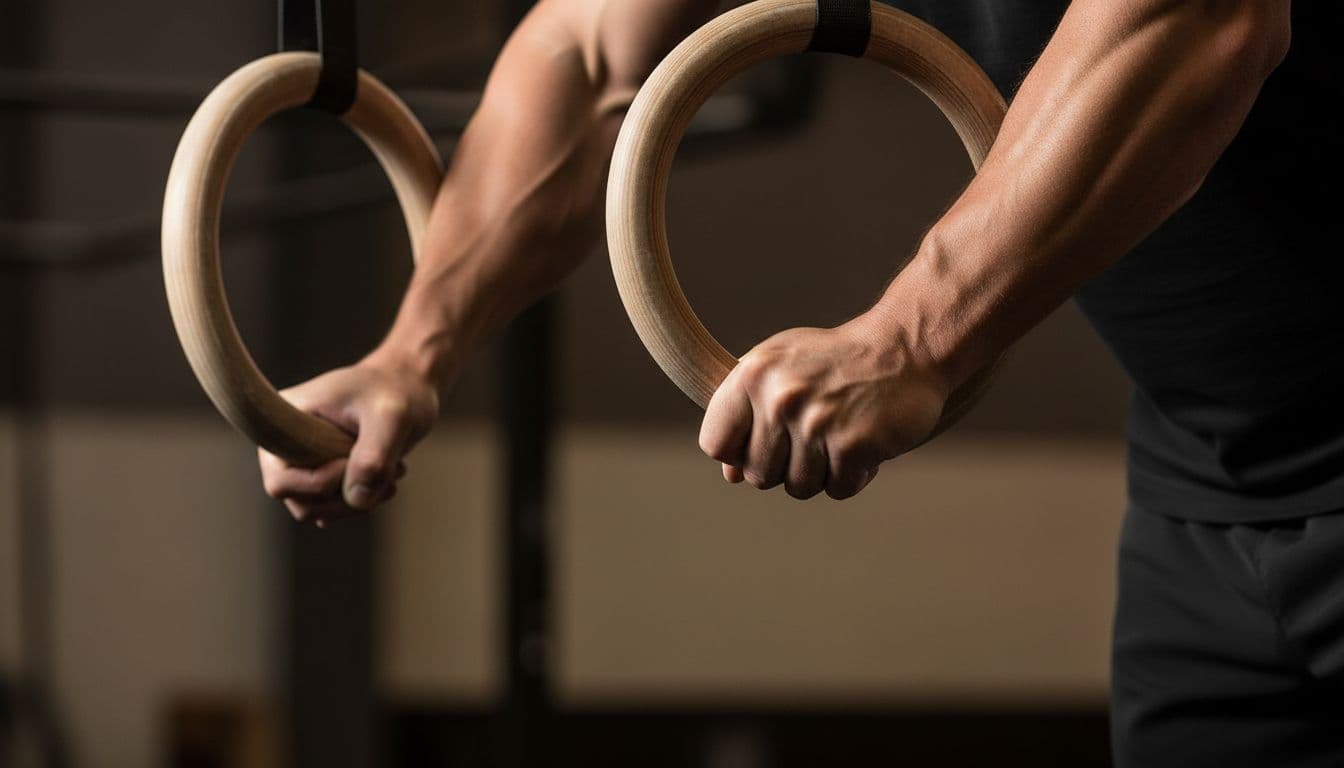
The Rings Difference: Instability as a Feature
On a fixed bar, your stabilizer muscles get a free ride. On rings, every rep demands total body coordination to prevent the rings from shaking out of control.
This instability forces recruitment of muscles you didn't know existed—particularly in the shoulders, core, and scapular region.
The result: Superior strength that transfers to every other movement. Athletes who train rings find bar work feels 'easy' in comparison.
Ring Dips: The King of Upper Body Pressing
A ring dip requires 40% more muscle activation than a parallel bar dip (based on EMG studies). The instability demands constant adjustment from the chest, shoulders, and triceps.
Progression: Support hold → Negative dips → Partial dips → Full dips → Weighted dips
Goal for advancement: 10 clean ring dips with minimal shake before attempting muscle-ups on rings.
- 3–5 high-quality reps per set
- Full control in the transition
- Stable dip at the top
Ring Rows and Pull-Ups: Full Range Pulling
Rings allow your wrists to rotate naturally throughout the movement—eliminating the joint stress that fixed bars can cause.
Ring pull-ups with a supinated (underhand) to pronated (overhand) rotation build bicep and lat strength through a fuller range than any bar exercise.
For those with elbow or wrist issues, rings are often the pain-free solution.
Skill Unlocks: What Rings Make Possible
The false grip on rings is more forgiving than on a bar, making the muscle-up transition smoother to learn.
Ring-specific skills like the Iron Cross, Maltese, and Victorian are the pinnacle of calisthenics strength—and can only be trained on rings.
Even if you never attempt these elite skills, the strength foundation they build transfers to everything else.
Buying Guide: What to Look For
Material: Wood rings offer the best grip and feel. Plastic is cheaper but slippery when sweaty. Metal is durable but cold in winter.
Straps: Numbered straps make height adjustment easy. Look for straps rated to at least 300kg.
Budget: Good wooden rings with quality straps cost €25-50. This is one of the best investments in calisthenics equipment.
FAQ
Yes, with proper progression. Start with feet-supported exercises (ring rows, assisted dips) before moving to full hanging work. The instability teaches control gradually.
You could, but variety is beneficial. Bars are better for some exercises (strict pull-up volume, bar muscle-ups). Ideally, incorporate both into your training.
Ceiling-mounted anchors, door frame mounts, or outdoor options (sturdy tree branches, playground structures). Always test the anchor point with your full weight before training.
Related Posts
Front Lever Mastery: The Complete 12-Week Program
From dead hang to full front lever. A systematic approach combining specific strength work, progressive holds, and the science of straight-arm strength.
The Strict Muscle-Up: 5 Progressions to Mastery
A no-nonsense progression ladder that builds explosive pulling power, clean transitions, and absolute bar control. Stop kipping and start mastering the strict movement.
London’s Iron Jungles: The Best Calisthenics Parks
A curated guide to London's elite calisthenics spots. From the legendary bars in Hyde Park to hidden gems in Hackney, we review equipment and community vibes.
Ready to start training?
Find a park with the right equipment and start progressing today.
Find a Spot